01 Challenge
Complex operating states need better visibility
Teams needed faster visibility into complex operating conditions and a better way to explore scenarios before decisions were made.
Client/Sector: Industrial operations and project teams
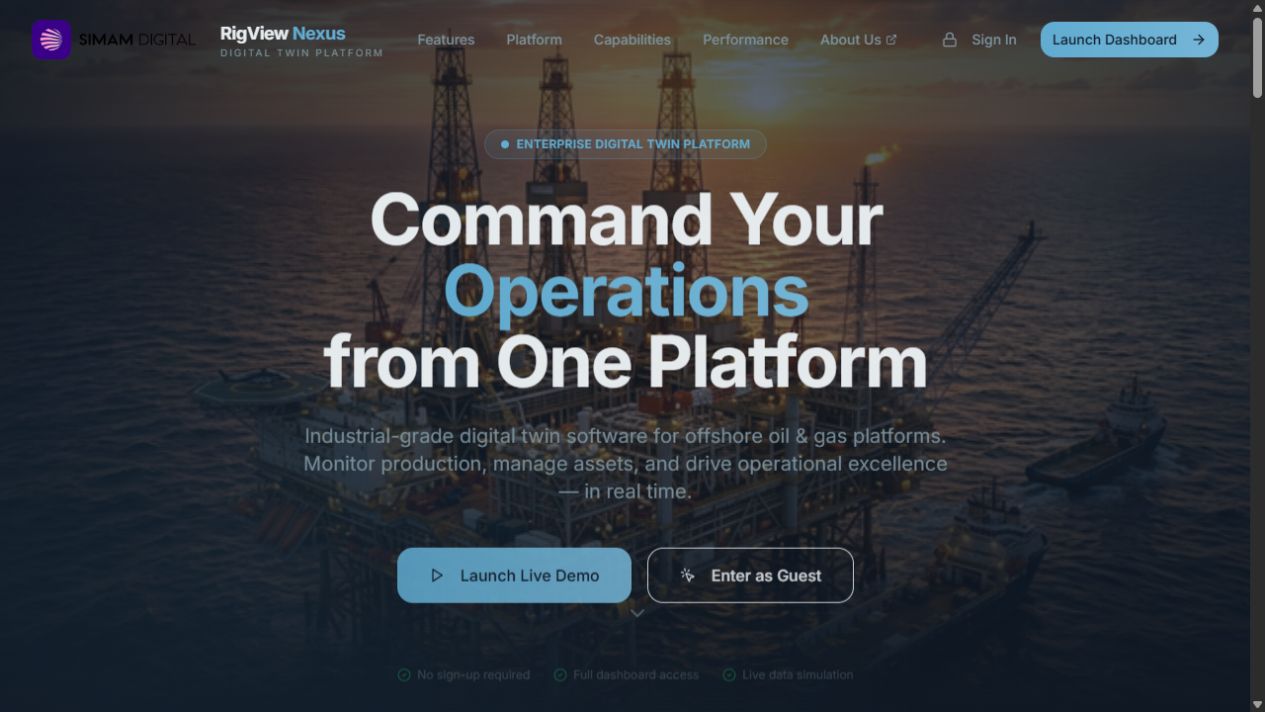
A simulation-oriented operations interface designed to make complex states easier to review, compare and discuss before decisions were locked in.
Project Snapshot
01 Challenge
Teams needed faster visibility into complex operating conditions and a better way to explore scenarios before decisions were made.
02 Approach
I delivered a digital twin interface that supports operational simulation, visual monitoring, and scenario review in one environment.
03 Execution
I led interface architecture, ingestion workflow planning, and iterative feature delivery based on stakeholder review cycles.
04 Outcome
The platform improved shared operational understanding and reduced friction during planning and review sessions.
Technical delivery
This POC explored how asset condition, process state and scenario comparison could be presented safely before live operational integration. The emphasis was on a traceable simulation and decision interface rather than claiming control of a production facility.
Facilities, systems, equipment and sensors need explicit relationships before a dashboard can explain cause and impact. The prototype organised state around that hierarchy, allowing a user to move from an overview condition to the relevant equipment and supporting signal without treating every metric as an isolated chart.
Scenario comparison is useful only when users can distinguish a live observation, historical record and hypothetical value. The interaction model labelled scenario context and kept alternative states reversible, creating a safer basis for discussion than silently replacing the current operational view with simulated data.
The work made integration boundaries, update cadence, data quality, permissions and audit expectations visible to stakeholders. It demonstrates technical product thinking around a regulated operational domain while remaining clear that the public version uses simulated or representative information.
Project summary
The essential product, role and delivery context behind the work.
Short answers for people comparing vendors, project approaches and similar technical work.
An oil and gas digital twin is a software representation of industrial assets or operations used for visibility, simulation or decision support.
They can improve monitoring, planning, exception handling, training and understanding of complex operational systems.
This case study supports digital twin development, industrial dashboards and operational simulation searches.